What Is the Difference Between a Lawyer Notice and a Court Notice?
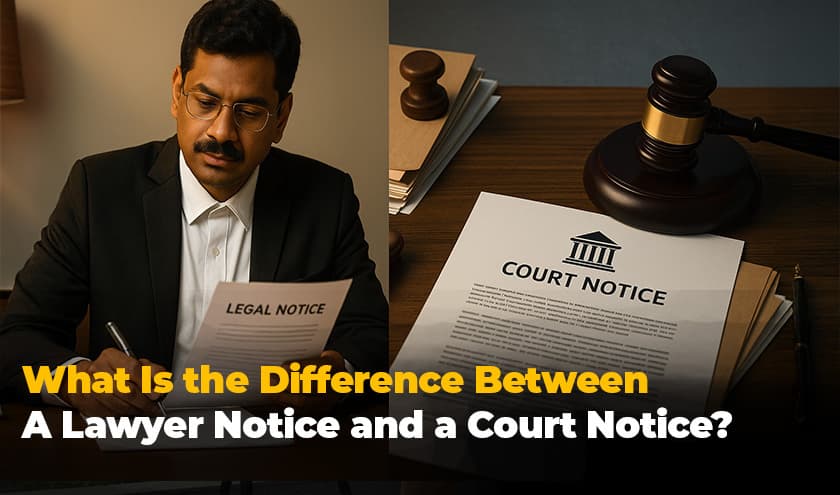
What Is a Lawyer Notice? Meaning and Purpose
A lawyer notice is a formal legal document sent by a lawyer on behalf of their client, typically before filing a court case. It acts as a pre-litigation communication warning the recipient of legal action unless the issue is resolved within a given time frame.
Key Purposes of a Lawyer Notice:
- Warning before legal action
- Opportunity to settle disputes
- Preserve evidence of communication
- Assert rights or demands clearly
Common Scenarios Involving Lawyer Notices:
- Property disputes
- Cheque bounce cases
- Loan defaults
- Employment or contractual disagreements
Pro Tip: If you receive a lawyer notice, consult a legal expert immediately to avoid escalation. You can easily speak to a lawyer online for quick advice.
What Is a Court Notice? Legal Definition and Impact
A court notice is an official communication issued by a court of law, typically in the form of a summons, warrant, or written order. It informs the recipient that a case has been filed or that they are required to appear before a judge.
What Does a Court Notice Mean for You?
- You are now part of a legal proceeding
- You may be asked to respond, appear, or submit evidence
- Failure to comply can lead to legal penalties or default judgment
Examples of Court Notices:
- Summons to appear in civil or criminal court
- Writs or orders in property, family, or consumer cases
- Notices for hearing or document submission
Warning: A court notice carries serious legal consequences. Always respond within the timeline mentioned or risk further legal trouble.
Key Differences Between a Lawyer Notice and a Court Notice
Understanding the difference between a lawyer notice and a court notice is crucial for anyone facing a legal situation.
Comparative Table: Lawyer Notice vs. Court Notice
Feature
Lawyer Notice
Court Notice
Issued By
A lawyer on behalf of a client
Court (judge or court clerk)
Legal Weight
Informal but serious
Legally binding and enforceable
Purpose
Pre-litigation warning
Formal initiation of legal proceedings
Response Required
Not mandatory, but advised
Mandatory with legal consequences
Timeline to Respond
Usually 7–30 days
Strict as per court’s instructions
Examples
Loan recovery notice, defamation warning
Summons, court hearing notice
Still confused about what is a lawyer notice vs what is a court notice? Book an online lawyer consultation through VakeelSaab to clarify your situation today.
How to Respond to a Lawyer Notice: Step-by-Step Guide
If you receive a lawyer notice, here's what you should do:
- Stay Calm – It's a warning, not a lawsuit yet.
- Read Carefully – Understand the demand or allegation.
- Gather Supporting Documents – Contracts, messages, or receipts.
- Consult a Lawyer – Don't reply without legal guidance.
- Send a Formal Reply – If appropriate, through your lawyer.
Why You Should Not Ignore a Lawyer Notice
- It can become evidence in court
- Your silence can be interpreted negatively
- Early resolution saves time and money
Need help drafting a reply? VakeelSaab offers affordable, reliable legal advice through experienced lawyers across India.
What to Do If You Receive a Court Notice in India
Responding to a court notice is time-sensitive and mandatory.
Steps to Take Immediately:
- Read the Notice Carefully – Check for case number, hearing date, and purpose.
- Consult a Lawyer Immediately – Time is of the essence.
- Prepare Your Legal Documents – Contracts, emails, identification.
- Attend Court Hearings – Failing to appear can result in a default judgment.
- Follow All Court Instructions – Submit replies, objections, or documentation as needed.
Remember: Ignoring a court notice can lead to arrest warrants, financial penalties, or property attachment.
Real-Life Example: When Ignoring a Lawyer Notice Turned into a Court Case
Client Case: Business Contract Dispute
- A small business owner received a lawyer notice for breach of contract.
- He ignored it, assuming the other party wouldn’t pursue it further.
- A month later, he received a court notice initiating a civil suit.
- With VakeelSaab's help, he was able to file a written statement and avoid a judgment in default.
Lesson: Taking timely legal advice can prevent litigation or prepare you to defend effectively in court.
Best Practices: How to Handle Legal Notices Efficiently
Expert Tips from VakeelSaab Lawyers:
- Always treat legal notices seriously — whether from a lawyer or court.
- Respond within legal time limits.
- Keep written records of all communication.
- Avoid verbal commitments — always respond in writing.
- Use professionallegal services to ensure compliance with Indian law.
You can speak to a lawyer online anytime via VakeelSaab to get instant clarity on legal matters.
Call to Action: Get Expert Legal Advice Today
Received a legal or court notice? Don’t guess — get legal guidance from India’s trusted platform. At VakeelSaab, we connect you with verified lawyers for a quick and confidential consultation.
Online Lawyer Consultation Available Affordable Pricing Civil, Criminal, Property, and Business Law Experts
Frequently Asked Questions (FAQs)
Q1: Can I ignore a lawyer notice?
No. While not legally binding, ignoring it can escalate the matter to court.
Q2: Is a court notice a criminal charge?
Not necessarily. A court notice can relate to civil or criminal matters. Always check the type of case.
Q3: What is the time frame to reply to a lawyer notice?
Usually between 7 to 30 days, depending on the nature of the notice.
Q4: Can I send a lawyer notice myself?
You can, but it's advisable to go through a professional lawyer to maintain credibility and legal accuracy.
Q5: How can I consult a lawyer online?
Use VakeelSaab’s platform to book a legal consultation with licensed advocates across India.
Related Articles
The Importance of Consulting a Property Lawyer for Real Estate Issues
Blog
How to File a POCSO Complaint in India: Step-by-Step Legal Process
Blog
What punishments does the law give for giving, taking, or asking for dowry?
Blog
Reasons for the Increasing Divorce Rates in India
Blog
What is a Special Leave Petition? Meaning, Features, Process & & Who Can File?
Blog
What Is the Difference Between Mutual Divorce and Contested Divorce?
Blog